Wednesday, 5 March 2025

 THE HOLY LAND 

WITH ECHOES OF BRITISH MANDATE 

A doctor travels where the British trod

John Walker-Smith

John Walker Smith (Author)


HOW TO ORDER 

Softback PRICE £10.50 & P & P  UK  £3.00

The Memoir Club, 34 Lynwood Way, South Shields. NE34 8DB

Cheques payable to Lynn Davidson or bank transfer: 

BARCLAYS  20 83 69   83948145

Telephone:  07552086888  Email: memoirclub@email.msn.com 

This book is a memoir of a doctor’s visits to the Holy Land, in 1964 as a Christian pilgrim, and then as a medical lecturer to Jerusalem in 1987 and 1995 as well as to Amman in 1985. Although he is a retired academic, this is not an academic historical text. The facts mentioned are firstly those that were told to him at the time (he kept careful contemporary records) together with additional facts he learnt by reading from books listed in the bibliography.

He records his own experiences and responses as a contemporary witness of the time. These are contrasted and compared with the experiences of two past British visitors Sir Frederick Treves surgeon in 1912, during Turkish/Ottoman occupation, and H V Morton, the author, in 1934 during the British mandate. These witness accounts of how things were perceived during past times, provide an interesting background to the current situation in the Middle East.


PREFACE

At a time when tensions in the Holy Land continue to resonate around the world, John Walker-Smith’s beautifully written memoir of his visits to Jerusalem, coupled with his historical insights, help to guide modern readers through the rich and complex history of the area. It is impossible to resolve the challenges of the present without understanding the region’s past, and John’s thoughtful memoir provides us with unique insights and reflections to deepen our understanding and enlighten all those who wish to see an enduring peace in the Middle East.

Stephen Hickey British Ambassador to Iraq 2019 to 2021 Director of the Middle East Department at the Foreign Office

BOOK LAUNCH

Book Launch Royal College of Physicians


Speech Royal College of Physicians

REVIEWS

We are pleased to spotlight Professor John Walker-Smith, one of ESPGHAN’s most influential and longstanding members, and recipient of the first ESPGHAN Distinguished Service Award at the 2010 Annual Congress.
Born in Sydney in 1936, Professor Walker-Smith followed a family tradition in medicine and trained at the Royal Prince Alfred Hospital, later completing postgraduate training on the Hammersmith Course in Medicine. He specialised in gastroenterology with a particular interest in diseases of the small intestine.
At a time when paediatric gastroenterology had not yet emerged as a defined specialty in Australia, he helped establish safe and effective biopsy services for children at the Royal Alexandra Hospital for Children and is widely credited with developing the suction biopsy service in Sydney.
After moving to the UK, he led pioneering clinical and academic units in paediatric gastroenterology at St Bartholomew’s Hospital and the Queen Elizabeth Hospital for Children in London, where his work in the East End laid important foundations for the investigation of acute and chronic diarrhoeal diseases and complex enteropathies. In 1996, he also led the transfer of these units to the Royal Free Hospital, forming the University Department of Paediatric Gastroenterology, where he worked until his retirement in 2000.
Alongside his clinical and academic work, Professor Walker-Smith served as ESPGHAN Editor of the Journal of Pediatric Gastroenterology and Nutrition (JPGN) from January 1995 to January 2000.
In addition to being a world-renowned paediatric gastroenterologist, he also holds an MA in Christianity and the Arts from King’s College London. Over the years, he has authored several non-medical works, including Enduring Memories (first published in 1983, with a second edition in 2012), the poetry collection Poems of Love and Death (2007), and Hope, Beauty and Friendship (2023). His most recent book reflects on his travels and experiences as a doctor over more than 60 years, including his perspective on the complex history of the Holy Land in the Middle East. 

We thank Professor Walker-Smith for his outstanding and lasting contribution to ESPGHAN and to paediatric gastroenterology worldwide.     ESPGHAN

When the Gospel writers described the life of Jesus, they added the time and place of almost every event. It’s as if they were alerted by the insistence of doubting Thomas to be given physical evidence of the Resurrection. The evangelists may not have thought that future generations would believe their accounts without including these details. Such caution may be understandable when narrating the events surrounding the Nativity, Crucifixion and Resurrection (all in Judea). But they also give the locations of most of His miracles and His teachings (many in Galilee). This has meant that future Christians had a topography of the events of Jesus’ life. This knowledge has drawn Christians to the sites from far and wide over the past 2000 years. However, as the author, John Walker-Smith, explains in his highly readable book, Christians have only administered the Holy Land in three periods in that long history: first, for around three centuries from the conversion of the Roman emperor, Constantine, in the early fourth century, to the Moslem capture of Jerusalem in the seventh; second, the Frankish kingdom from 1099 to 1187, with a shrunken coastal state until 1291; and third, from when the League of Nations mandated the British Government to administer Palestine after the fall of Ottoman rule in 1917 to their withdrawal and the creation of new states by the United Nations in 1948.

It is this last period that the author focusses on. He points out what distinguishes this short administration from other regimes. At all other times the area has been fought over by Jews, Christians and Moslems, each of whom felt that they had a right to the whole territory. Each has had periods in history where they were the sole rulers. John Walker-Smith, with his careful attention to historical accuracy notes that the only other time when they Holy Land was shared, was in the reign of the Holy Roman Emperor, Frederich II (rr 1220-1250) when Christians and Moslems agreed to administer Jerusalem jointly, with having primacy over different sectors.

John Walker-Smith describes how the administrators of the Mandate strived to endow the world with a Holy Land where Jews, Christians and Moslems could live in peace and harmony. He uses the travel writing of three Anglican Christians to illustrates the points he wishes to convey. They are the eminent Edwardian surgeon Frederick Treves (in the last years of the Ottoman empire in 1912); HV Morton, a traveller at the time of the Mandate; and his own observations after the Mandate had ended (1964, in the company of pilgrims from the diocese of Gloucester and again after the 1967 war, twice in his capacity as a clinical academic in 1987 and 1995).

A great strength of the author is that he stimulates thought and allows the reader to reflect on the significance of the observations that he makes. His written text is supported in this by 95 superb figures, almost all in colour. The text is full of examples of thought-provoking text illustrated by a figure. There are too many to mention in a short review. One simple example is his description and photograph of a Palestinian stamp, issued during the mandate. This is in English, Arabic and Hebrew. He points out that no stamp (unlike other stamps in the British Empire) carried the head of the King (either George V or George VI). This allows the reader to understand why the three official languages still used (as for example on the tram in Jerusalem) are English, Arabic and Hebrew. More important, the lack of a King’s head demonstrates that the British did not regard Palestine as their land, but that they were protecting it for the world and for future generations. This brings us to the central theme of the book: that the British involvement in Palestine was altruistic. The author clearly points out they knew the dangers of administering the hotly contested country in the 1920s and 1930s, but that they had hoped to develop a state where different peoples could live together in peace. That this has not been realised is no fault of the British Administrators of the Mandate, who did everything in their power (which included the loss many British lives, including in the police, the armed forces and civilians) to make this happen. John Walker-Smith, with his instinctive understanding of the Church of England’s tolerance to other faiths (which is reflected in public policy) describes this thinking (so unlike our Medieval ancestors). He writes that the administrators emphasised areas of communality between the faiths, such as each being descended from Abraham. He points out that the rock on which Abraham came close to sacrificing Isaac was considered a physical embodiment of this idea.

This again throws up questions as to what constitutes human greatness in members of a governing group. Are Frederick II and the administrators of the Mandate the only people to show greatness in the Holy Land since the life of Jesus Christ, in that they wished to see harmony and equality among peoples from different backgrounds? Was the Mandate, run by people influenced by the Enlightenment, a missed opportunity; or was it an experiment that was doomed from the start? Buying this book is the literary equivalent of purchasing a plant, which in the course of one’s reading grows into something much bigger because of the questions it raises in the reader’s mind.

A great strength of the book is the that its information is always linked to the travel writings of one of the three writers. This makes for easy, but fruitful reading. Choosing travellers who span the momentous changes of the Holy Land over the 20th century from the Ottoman Empire, through the Mandate and into modern times, before and after the wars of 1967 and 1973, gives a time dimension to the places described. The book should be read by anyone interested in the Middle East. It is essential reading for anyone who has visited or intends to visit the Holy Land as a Christian.                           Professor Ian Sanderson 

_____________________________________________

This polymath recounts his travels, that of a doctor, in the steps ‘where British trod’ over an extraordinary period of more than 60 years, starting with his first trip in 1964. Professor Walker-Smith succeeds magnificently in combining the personal with the erudite, and the very human insights that we are allowed by his fascinating account of this incredible part of the world are sublime.

It is enormously relevant to our understanding of the battles that continue to rage in the Middle East but also gives the reader an overview of the spiritual journey that Professor Walker-Smith has undertaken, and that we are also privileged, with this detailed and compelling account, to take with him. It is nothing less that a tour de force of historical accounting and I learnt a huge amount.

The large numbers of beautiful illustrations show us just what individuals such as Sir Frederick Treves may have experienced of the region. Combining his Australian and English heritage through a religious prism, the author allows the history of the region to unfold for us within its pages. We can travel on our own ‘Via Dolorosa’ as we follow its narrative and it only makes one want take a journey to the Holy Land, if we have not been, and again if we have, to see it through different and now informed eyes.

With this knowledge then, of course, comes improved comprehension of the intricacies and influences that continue to inflict such heartache for the people of the region, who are pulled in so many directions by religious and political influences - some of the history of which is drawn out for us by Prof Walker-Smith. Furthermore the influence of his spirituality is clear within his writing, which is also very well referenced.

It is, in short, at once an informative and a delightful read, with observations that are as relevant to the region now as they have ever been. Prof Mike Thomson

_________________________________________________________________________

A pilgrim’s heart, a scholar’s memory

John Walker-Smith, known and remembered as ‘Prof” by generations of medical students and fellows around the world, once again shares something deeply personal – this time not through poetry, but through prose shaped by faith, memory, and reflection. In The Holy Land – with Echoes of British Mandate, he guides us across Jerusalem, Bethlehem, and the broader landscapes of Israel and Palestine – a journey both inward and historical. The book spans three major phases: his first visit in 1964 as a young Christian pilgrim; his professional returns in the 1980s and 1990s as a visiting professor of medicine; and his encounters with earlier British travel writings, particularly those of Frederick Treves (1912) and H V Morton (1934).

What results is more than a travel memoir. It is a sustained reflection on how sacred geography lives on in personal experience and in the long shadows of history – viewed through the eyes of a man whose Christian faith, especially as an Anglican, is never absent, and whose memory of places visited decades earlier is nothing short of astonishing.

Decades remembered – every stone, every turn

One of the most striking aspects of the book is the precision with which Walker-Smith recalls places visited long ago – alleys, courtyards, holy sites, borders and backstreets, described as if freshly seen. His memory is remarkably intact, not only emotionally but topographically: every stone and pillar, the view from each terrace, the echo of footsteps in cloisters, recalled in astonishing detail. It becomes immediately clear that this is not a generalist’s recollection, but a careful, deliberate documentation – the product of a mind as devoted to observation in the world as in the hospital ward. The geography of the land is memorised like a clinical chart – not cold, but exact; not clinical, but loving.

Adding to this vividness are the original colour photographs taken by the author himself, e.g. during his first journey in 1964. Among them is the image of a postcard he had sent to his sister – a personal trace embedded in the record of the land. Other photographs show street scenes, local children, or, indeed memorably, the striking contrast between the brilliant colours of cloths from Bethlehem and the pale stone walls on which they hang – a moment of such visual charm, one is almost inclined to stand still and simply take it in. Another especially touching image shows pressed flowers bought in Jerusalem in 1964 – still retaining their colours after more than half a century. These visual documents lend the book a rare sense of intimacy and authenticity – they are not illustrations, but extensions of memory.

History, archaeology, and the record of time

While the prose is quieter and more restrained than the lyrical elegance of Walker-Smith’s poetry, the depth of historical and archaeological research in this book is profound. He moves with confidence between biblical reference, local tradition, and the findings of modern archaeology – always precise, never speculative. Whether describing the Church of the Holy Sepulchre, the Dome of the Rock, or the ancient layout of the Old City, he provides details rooted in extensive reading, attentive walking, and decades of reflection. He does not romanticise: commercialization, decay, and conflict are noted with concern, but not cynicism.

What matters most is the continuity of place and presence – the way faith, stone, and story endure across centuries.

At one deeply personal moment, the author recounts how, as a 28-year-old pilgrim in 1964, he collected water from the River Jordan in a container he had brought specially for the occasion – water that would, years later, be used for the baptism of his first child. It is a gesture that embodies both faith and foresight, and it encapsulates the spirit of the book: not only to witness the Holy Land, but to carry it forward – symbolically and sacramentally – also into the life of the author’s own family.

Three voices across three eras: Treves, Morton and Walker-Smith

The author’s structural choice to embed his reflections within the writings of Treves and Morton adds historical depth. Treves, writing under Ottoman rule, offers descriptions that are at times dry, sometimes even cynical, but always grounded in the physical realities of early 20th-century Palestine. Morton, writing in 1934 during the British Mandate, appears more impressed by the visible modernisation and archaeological uncovering, yet his tone is cautious rather than celebratory – a recorder of promise more than a prophet of peace. Walker-Smith uses their voices not to contrast, but to layer time: to show how the same sites and streets can mean different things across generations. His own perspective is rooted in reverence, in careful judgment, and in a humanistic Christianity that seeks understanding rather than dogma.

The British Mandate: romantic endeavour or failed ideal?

One of the more compelling themes running through the book is Walker-Smith’s nuanced view of the British Mandate. He does not present it as an unqualified success, nor as a villainous colonial episode. Rather, he reflects on it as a brave – perhaps romantic and ultimately naive – attempt to unify the three great monotheistic religions under a shared administration. The British, in his eyes, were often sincere in their efforts: civil servants, soldiers, administrators who acted with courage and, in some cases, genuine moral conviction. There is something of the ‘crusader spirit’ in how he describes their role – not in a military sense, but in their vision of service and stewardship. At the same time, he acknowledges how the Mandate ultimately failed to establish lasting peace or shared governance. Its legacy, though complex, is maybe not without merit – and in Walker-Smith’s reflections, one senses both admiration and sorrow for what might have been.

To me, this complexity is nowhere felt more acutely than in the author’s descriptions of Jerusalem – a city he returns to again and again. It is here that he quotes the Israeli writer Amos Elon, who once called Jerusalem ‘the tiger city’: a place so fiercely contested and bitterly embattled, yet simultaneously so inseparably bound to the concept of peace. This contradiction lies at the heart of the book, and of Walker-Smith’s entire reflection on the Holy Land – the coexistence of holiness and violence, devotion and division, longing and despair.

Faith as guide – Christian and Anglican

Underlying the entire narrative is Walker-Smith’s deep commitment to Christianity. His Anglican faith is not merely background; it shapes how he sees the land, the people, and the sacred. Each church visited is not only a monument but a place of prayer. His readings of biblical history are informed by both scholarship and devotion. Even the discomfort he occasionally expresses – at over-tourism, or the commercialisation of sacred sites – comes from a place of reverence. He does not preach, but he walks as a pilgrim, and his eyes never lose sight of that first journey of faith.

A doctor’s eye, a pilgrim’s soul

While many will recall the poetic delicacy of Walker-Smiths book Hope, Beauty and Friendship, this memoir offers something just as valuable: constancy of perspective. We see here the same John Walker-Smith known to so many medical students and colleagues precise, observant, quietly moved. He writes not as a tourist, but as a witness: to time, to the persistence of faith, to the moral weight of history. His observations are restrained but deeply considered. His chapters, though not elaborate, are honest and enduring.

As one of his former pupils – an Austrian, and so privileged to have had him as a particularly formative clinical teacher – I can attest that the clarity and humanity evident in this book mirror exactly what shaped his bedside manner and mentorship. It was through him that I was introduced to the Anglo-American academic world of Paediatric Gastroenterology and to ESPGHAN, the European Society for Paediatric Gastroenterology, Hepatology and Nutrition. I vividly remember the Jerusalem ESPGHAN meeting of 1995 – my first – which Prof. Walker-Smith too attended. Reading this book, so many memories came back to me, and I found myself reflecting on them with a certain inner warmth, as we might say. I am once again walking those streets, learning from his insight, and grateful for the quiet power of his example.

In the end, The Holy Land – with Echoes of British Mandate is not just about geography – it is about memory, conscience, and belief. It is about how a life of clinical work and teaching can also be a life of reflection, and how history lives on in each stone we remember, in each prayer offered, and in each story we choose to carry forward. Or, as we might say in my own language: Es bleibt etwas zurückAlmuthe Christina Hauer, MD PhD    

    ______________________________________________________      

There is much to enjoy from this journal of three sojourns in the Holy Land, the Land of the Holy One, Palestine/Israel.  John Walker-Smith refers to it as the Holy Land, which is how I have always referred to the land in which Our Lord Jesus Christ was born, but we owe it to the current situation, to acknowledge there is far more than one interpretation.

The chapters that make up The Holy Land with Echoes of British Mandate are each one short, which means the reader is always on the move, as befits a pilgrimage to the Holy Land; whether you like it or not, you are always moving, and John makes this possible!


There is no shying away in the book, from the disappointment of finding in Jerusalem an over-commercialised and dirty city, a place where peace and quietness are as rare in any other city on earth!  But he reminds us, the reader, the fellow traveller, that these are to be found, as they can be found in our daily lives, they just need to be sought out.


Sir Frederick Treves, with whom John travels in a literary sense through parts of the book, paints a rather unflattering portrait, but as John points out, beauty or lack of it is very much in the eye of the beholder.  And so, it is!


John Walker-Smith is a doctor and his book is laced through with medical observations as befits such a pilgrim.  It is these observations that give this volume of memories, reminiscences, and reflections a quality, that spans the decades from his first visit with a group from the Diocese of Gloucester in the mid-1960s.  There is a timeless quality, as timeless as the focus of the book – the Holy Land.

The Revd Canon Thomas Woodhouse Chaplain, The King's Chapel of the Savoy
within the Duchy of Lancaster


_______________________________________

John Walker-Smith, renowned for his ground-breaking work in the field of Paediatric Gastroenterology, has produced a very personal account of his travels to the Holy Land which is strongly underpinned by his deep Christian faith. He made three visits, the first in 1964 as part of a pilgrimage led by the Bishop of Gloucester and the second two in 1987 and 1995 with the primary aim of attending medical conferences.

As befitting a Christian medical man, Professor Walker-Smith has carefully read the travel diaries made by the famous surgeon Sir Frederick Treves during his trip to Ottoman ruled Palestine in 1912. The scathing observations made by the dyspeptic Treves provide sharp counterpoint to the much more benevolent and thoughtful assessments of John Walker-Smith. Treves, who had saved the life of King Edward VII before his coronation and achieved fame by publication of his encounters with “The Elephant Man” Joseph Merrick, retired from surgery in his 40’s and became a best-selling writer of travel books. Treves seemed to have hated every minute of his time in Palestine, but amid his descriptions of desolation there are telling insights. I learned that the bare landscape of the Holy Land is not just due to the arid climate but because the Ottoman Empire exacted a tax on all trees apart from olive trees. This was clearly no free and idyllic homeland for its inhabitants before the establishment of Mandatory Palestine after the first World War.

The second writer studied in depth by the author was HV Morton, who visited Palestine and neighbouring countries during the time of the Mandate and published a series of books from 1934 to 1938. Morton provided a more explicitly Christian account than did Treves. A significant part of the book is of the author’s laudable attempts to walk and identify places described in the Gospels, in much the same way as Morton did in the 1930’s. This was clearly a labour of love and the result of much study and planning.

With daily news about the tragic consequences of conflict in this contested region, where rightful ownership is claimed by different religious groups, it has become commonplace to blame decisions made during the British Mandate for all that has gone wrong since. Professor Walker-Smith’s scholarly book provides evidence for the essential benevolence of Britain’s aims in this challenging and hotly contested region, with an optimistic though naïve hope of reconciling the three Abrahamic religions.

This is a very interesting personal account, featuring some remarkable illustrations. It will be of particular interest to those of a committed Christian faith but I would recommend it more generally to anyone interested in the history of these deeply troubled but always special lands.  Professor Simon Murch

_________________________________________________________

This book has a sub-title “A doctor travels where the British trod”.  In fact there are two doctors Sir Frederick Treves, and Dr John Walker-Smith.  It is a charming autobiographical travel guide written by the author when he visited the Holy Land as a pilgrim in 1964 and as a medical delegate in 1987 and 1995.  He quotes from Sir Frederick Treves’s book about his visit in the time of Ottoman rule and H V Morton’s travel books in Mandate times; the latter was required reading in religious studies when I was at school.  So we have three sets of opinions at significant different dates in history.  It is a book that I would have liked to have with me when I visited Israel and Jordan in the 1980s.  There is nothing written about after 1995 as it is a travel memoir.  All this is covered in excellent detail in the reviews above.

John Walker-Smith is a proud Australian and Empire loyalist.  In the First World War Britain and her allies fought The Ottoman Empire on the Gallipoli Peninsular in Turkey where they were defeated and forced to withdraw.  The Australian and New Zealand Army Corps (ANZAC) fought with great gallantry and it forged the identity of these Dominions.  At the same time the Suez Canal had to be defended from the Turkish Army which was threatening this vital Empire trade route.  The Turks were slowly pushed back but they successfully defeated the British 60th and 74th Divisions at the first and second battles of Gaza with heavy casualties.  The fighting line extended far into the desert in the East where it ended in an open flank and was the site of manoeuvre warfare. On 31st October 1917.  On  at the Battle of Beersheba there was a pivotal engagement when The Australian Light Horse gained international fame by charging and leaping the Turkish trenches armed with their bayonets, before then dismounting and achieving a significant victory.  There are a couple of photographs in the book of the Australian Light Horse.

I did not really understand the military history of the Holy Land after the fall of the Roman Empire.  John Walker-Smith describes the struggles between the three faiths that share their beliefs from common heritage, as they strive for the control over the holy city of Jerusalem.  Only in two brief periods of history have they achieved parity under one administration,  in the 13th Century and secondly under the League of Nations the British Mandate in 1920.  The British Military opposed the acceptance of the Mandate. Sir William Wilson, Chief of the Imperial General Staff, said in 1919, “the Problem of Palestine is exactly the same as the problem in Ireland, namely two people living in a small country hating each other like hell”.  Ironically he was murdered by the IRA in 1922.

The British Mandate between 1920 and 1948 was a well meaning attempt to achieve harmony between the Arabs and the Zionists.  Sir Ronald Storrs the Civil Governor of Jerusalem and Judea from 1917 to 1926 even held an annual service in the Anglican Cathedral for all faiths which was attended by leaders of the various Christian Churches, Orthodox, Armenian, Abyssinian, Anglican, Jews and Muslims, but this service was boycotted by the Latin Church; so much for intra-faith harmony!  He ensured that the Palestine Mandate postage stamps did not have the British King’s Head on them, and all street signs were in English, Hebrew and Arabic.  The initial good will was lost in the 1930s when the Palestine Police Force and British Army were subjected to terrorism culminating in the bombing of The King David Hotel in 1946.  In 1948 the United Nations ended the Mandate to Britain’s relief and then the state of Israel was born out of Palestine with civil war between Arabs and Jews.

This thoughtful travelogue has brought back happy memories for me before the region descended into political and military chaos that exists today.                                                                         Professor and Colonel (Retd) John Richardson


_________________________________________


I was delighted to receive a copy of your book today. Thank you so much. It looks splendid with the illustrations highlighting the text successfully. Professor N Savage

_______________________________________________


Books also written by the author

Medical 

Diseases of the Small Intestine in Childhood Four Editions 1975-1999                                            (4th edition S H Murch co-author) 

Practical Paediatric Gastroenterology, J A Walker-Smith, J R Hamilton and W A Walker                  1st Edition 1983, 2nd Edition 1996 

Autobiography  

Enduring Memories 1st Edition 2003, 2nd Edition 2012 

Poetry    

Poems of Love and Death 2007  -  Hope, Beauty and Friendship 2023 


Monday, 25 November 2024

Heroes of World War II – Their Finest Hour - Terry Ford


Book details:

South Shields Heroes of World War II
Their Finest Hour


Published Date - May 28 2024

ISBN - 9781068641817

Dimensions - 23.4 x 15.6 x 1.0 cm

Page Count - 140


Available at The Word £10 or online at:

South Shields Heroes of World War II – Their Finest Hour


Background:

The book started as an oral history project with Oxford University’s Their Finest Hour team. South Shields Local History Group recorded our members and the public with their wartime stories about their parents, grandparents, friends experiences in WW2.  These have now been turned into a 140 page book consisting of over 50 stories. The stories here cover most of the main theatres of war: the Home Front, France, Germany, Italy, Poland, North Africa, the Far East and the Atlantic Ocean. They also cover the various branches of the armed forces: Army, Merchant Navy, Navy and RAF and civilians.


Reviews:

Hard as it is to believe, there will come a time when there is no-one left alive who remembers how the Second World War devastated our South Shields landscape and robbed it of the flower of a generation. It underlines the importance of this remarkable volume which records, for posterity, the memories of some of those local folk who were child evacuees or, while still barely teenagers, were catapulted into the horrors of conflict on land, sea and in the air. Elsewhere in its pages, it falls to children and grandchildren to ensure that the stories of family members’ endurance and bravery, in action and on the home front, go on being told. In that respect there is no mythologising of war, which emerges as cruel, terrifying, pointless, muddled, sometimes funny and too-often heart-breaking. Oh, and it’s also a lesson in one generation talking to another, before it’s too late… 

Janis Blower

The history of South Shields at war in 50 memories. I couldn’t put it down. At home, living from day to day, rationed, bombed, making munitions, defending the town. In the Royal Navy and Merchant Navy on Arctic, Atlantic and Malta convoys, and with the ‘Wrens’ at Air Stations. With the RAF bombing Germany and on the ground in Africa. On the march with regiments in Normandy and Burma, and as Prisoners of War. Memories of fear and laughter, of death and camaraderie. Oral history at its best. Highly recommended. 

Peter S. Chapman, author of A Tyneside Heritage


We will remember them, words spoken every November but as time goes on less and less remembered. This book brings together the real stories of the real people of South Shields in their own words. Not just the military stories, but the impact on women and children. A fantastic initiative by South Shields Local History Group has ensured that, we will remember them. 

Ann Clouston, Colonel (Retired) OBE ARRC TD DL VR

I love this book. South Shields Heroes of World War II gives us 50 stories told by relatives with loads of photos. They did everything in all theatres of the war – as Churchill put it, at sea, on land and in the air – and of course there were those who kept the home fires burning, and the coal and the ships coming. This book makes me proud to be a Shieldsman. 

Robert Colls, Professor Emeritus of History, author of various books on North East history including Geordies. Roots of Regionalism.

Full marks to everyone who contributed to this important book. It astonishes that, almost eighty years since the ending of the Second World War, we now have this valuable record of the remarkable stories of some of the women and men of South Shields who fought, or simply endured life at home, during such a momentous time. 

Al Newham, Chair of South Shields Local History Group

This gem of a book is an amazing collection of wartime stories as remembered by those who lived through the war or as told to their relatives. What they experienced is very moving and the stories will leave you feeling quite humbled. They are written in the style in which they were narrated without editing which adds poignancy to the whole theme of the book. You will find it hard to put this book down.

Les Snaith, Lieutenant Commander, Royal Navy

The 50 memories contained in this superb volume are a true testament to the ordinary people of South Shields who like so many others answered the call of their country. The sacrifices of those in the Merchant Navy are particularly poignant given that South Shields lost more Merchant Navy personnel than any other town in the United Kingdom whilst serving on convoys ranging from the Arctic to Pacific. Throughout the book is the common theme of ‘after the war they never talked about it’ which is understandable given what some had gone through. However as time passes and those that experienced the war are no longer with us, those stories are now lost to time never to be recounted, which I am pleased to say this book goes a small way to addressing. Perhaps if that generation of ordinary heroes had told their stories we as a nation may have learnt from them the futility of war and moved on to a better place. 

Keith Trotter ex Second Mate Merchant Navy

Friday, 22 November 2024

WHAT HAVE WE DONE - HAYDN WATSON

 HOW TO ORDER

Price £9.99 & £3.00 P & P


Available from Lynn Davidson, The Memoir Club, 34 Lynwood Way,                                        South Shields, NE34 8DB 07552086888

Please make cheques payable to Lynn Davidson

Or email memoirclub@msn.com


                                                     This is a story of sorrow, hope and courage.                                                          During a time of fear and despair, faith in humanity is put to the test.

AUTHOR

I was brought up in South Shields. I lived in Simonside and attended Simonside Junior School. I then attended Westoe Boys and gained certificates including Northern Counties in Geography and CSE Grades in maths, English and English literature, history and technology. My first 20 years in employment was as an Engineer in Fabrication and Welding. In 1991, I gained a B.Ed. in Design & Technology and began teaching in Seaton Delaval. I moved onto schools as Head of Department in Sunderland and Ashington. I then took up lecturing posts at New College Durham, Gateshead College and Newcastle College. I retired from teaching in 2020.

As a child, I was an avid reader and that has continued to this day. I was spellbound by books such as Kidnapped, Treasure Island, War Of The Worlds, Robinson Crusoe, Tom Sawyer, The Old Man And The Sea, To Kill A Mockingbird and Kon Tiki.

In 2012, I began writing short stories and in 2020 I started writing my first book A Life Navigated. This story was based on true events and follows the life of a man who faced many challenges in his life. My second book Garn Yem, is about my life as a teenager in South Shields. It is a chronicle of nine young men and their lives in the early 1970s. It is about friendship and is a chronicle of short stories that has many comical experiences. My third book What Have We Done? is a story of the Holocaust. I have created a fictional Jewish family in Czechoslovakia who are caught up in the Shoah. I have also written a follow up to Garn Yem, which will be published next year.

I have five children and eleven grandchildren. My interests include music; I play guitar and I am a singer with the Jarrow Choral Society.

INTRODUCTION

The world has known horror, desolation and inhumanity ever since man first walked the earth. The persecution of the Jews and the rejection of their faith has been prevalent for thousands of years. From the early days of the Old Testament, they have suffered treachery and hostility resulting in many instances of condemnation and exile.

As a result, the spread of antisemitism radiated across the globe. Many sought to undermine and exclude their traditions and ultimately seek to extinguish their very existence. History has shown us that Jews have endured hatred on a vast scale. Jews have been subjected to racist ideology, misery and indescribable cruelty by monarchs, despots and dictators. They have often been portrayed as untrustworthy, selfish and corrupt. Even literature has revealed its resentment, when Shakespeare sought to create Shylock as an unpopular Jew in the Merchant of Venice; when Launcelot Gobo wrestles with his conscience and describes his master as a fiend and a devil.

However, what transpired from 1933-45, under the cloak of National Socialism and Adolf Hitler; will be remembered as the darkest period in human existence. Hitler’s obsession with the cleansing and clearing of Jews (Judenrein) would remain his singular perversive objective. The horror of what took place in Europe on the orders of Hitler and the Third Reich is beyond belief and yet it happened. The Nazi regime sought to complete their ‘Final Solution’ and exterminate a race of people because they posed a so-called threat to their ideals. The only weapons Jews possessed were their pride and faith. This atrocity was not just wreaked upon the Jews; Hitler also included gypsies, communists, homosexuals and Jehovah’s Witnesses in his inventory of persecution. The self-proclaimed master race even created a dictum that summed up their grim agenda with Lebensunwertes meaning ‘life unworthy of life’. 

This terrible passage of time in history must never be forgotten. The human race will only survive if we respect each other regardless of colour, race, sexuality or religious beliefs. Hearts and minds must be strong in the face of evil and recognise suffering. It is my firm belief not enough was done to prevent the annihilation of over 10 million souls. This does not rest well with me and it was a shameful derogation of responsibility that allowed Hitler to maintain his murderous plan of democide.
I dedicate this narrative to the millions that were murdered. To those who survived, you carried the torch of life and hope.

PROLOGUE

Reuban and Beila Spielmann were one of many families who had migrated from Kobrin in Bello Russia to avoid the continual repression the Jews were subjected to. They had serious misgivings as to the future under communist rule and sought a life of prosperity in the new state of Czechoslovakia. They travelled 305 miles to reach Czechoslovakia by train, taking two days, travelling through Poland to arrive at their destination in the district of Moravia. A friend, Benjamin Gerber, had made the same journey six months earlier and had sent Reuban a letter extolling the opportunities in Staré Hamry. Benjamin was a tanner and he had opened a shop selling leather goods in nearby Cieszyn. Reuban was a music teacher and he quickly established a school of music in Staré Hamry which is situated in the Moravian-Silesian Beskids mountain range, on the River Ostravice. The name of the village relates to a steel mill built in 1636 and the name Hamry refers to mill and Staré means old. The population of Staré Hamry in 1919 was 356.

Reuban and Beila had been married for five months when they arrived in Staré Hamry in the summer of 1919. Both Reuban and Biela’s parents had all died by the end of 1916 and they had no siblings. They settled into their new life and enjoyed a decent living, within a small enclave of other Jewish families. Beila worked for Moshe Schuster who was a cobbler in the village. In June 1922 Beila gave birth to their first child a boy, whom they named Yosef and two years later she gave birth to a daughter who they named Saris. Life was good in Staré Hamry and both children were thriving. In 1927 Reuban and Beila had another addition to the family when Tomas was born on a warm June morning. Unlike her first two deliveries Tomas was a difficult birth and Elazar Rabe the doctor was concerned Beila had lost too much blood during the birth. Fortunately, Beila recovered with the help of her family and much needed rest after the baby was delivered. Dr Rabe had advised Belia this must be her last child, as it would prove to be too great a risk, given the problems with the pregnancy.
Life was idyllic in those early years as the children grew, working hard in school and enjoying the world around them. At weekends Reuban would take the boys out hunting in the many forests bordering the village. Deer, hares, rabbits and partridges were regular sources of sustenance for the family. 

There was an abundance of wildlife in the area and they would often encounter brown bears, wild cats, foxes and lynx. On one hunting trip in 1932 they stumbled upon a brown bear attacking a wild boar. They watched for over an hour as both animals fought. 
The boar finally succumbed and it was killed and dismembered by the bear. Tomas was both shocked and a little uneasy having witnessed the battle and asked his father; “Why have you not rescued the boar father?”
Reuban answered; “The bear will have cubs hidden somewhere near Tomas and they will have to eat to survive. Life can be cruel, but without food those young bears will die. There are many wild boars in the forests Tomas and the meat from the boar will feed the cubs for many days.”
Reuban would often listen to the wireless after the evening meal and the news that Germany was in a state of political fervour troubled him. The National Socialists were gaining prominence and many thought the rhetoric being broadcast was very worrying. 
In 1932 the tension in the corridors of world power was palpable. Germany had established a strong army and along with Japan, had abandoned the League of Nations. Adolf Hitler became chancellor after gaining 36 per cent of the vote in a national election in January 1933. Ten years earlier Hitler had penned a book called Mein Kampf (My Struggle) while in prison for his radical beliefs. Within the narrative, he concluded; “The Jew is a destroyer of culture and a parasite within the nation.”

Reuban now spent most evenings listening to the wireless and would often seek the company of other Jews in the village and discuss the implications of Germany’s propaganda. Oblivious to all this; Tomas, Yosef and Saris enjoyed their school life, they had their own circle of friends. Reuban and Beila’s youngest boys’ close companions were Esther Wechsler, brothers Asher and Peter Solomon and Jan Moravec who was a Czech. Jan’s father was an electrician and his services were always in demand. The boys would play football together and go on adventure trails in the forest. Tomas and his friends also enjoyed fishing in the Ostravice River and in the summer, they would often dive in for a swim. As Jews, the Spielmann’s did not neglect their religion and readings from the Torah were regularly carried out along with prayers. Staré Hamry did not have its own synagogue, so prayers and religious festivals were performed within the houses of the Jewish community.

Europe was bracing itself for what was about to occur and the sabre rattling of Nazi Germany was intensified by one man’s prophecy of total domination. With this power he would eventually take hold and would create so much despair and sorrow, never ever seen before in the history of mankind.

FOREWORD

Having read this book, I was drawn into a world of fear. But also, a determination to survive in a reign of terror perpetrated by the Third Reich during World War Two. The characters jump out at you and then you are drawn into an epoch where safety is often a difficult place to find. We join them in empathy as we look at an environment where hatred and evil exist. The twisted ideology of Fascism that resulted in the planned mass extermination of a race of people is a terrible legacy of the last century.

This was an era when human beings were treated without respect and are herded like animals to their deaths. As a young teenager my mother encouraged my older sisters and me to watch the TV programme, The World At War. This she said, would guide us along a path of awareness to the evils carried out by those who would disregard human life. I still recall the introductory music and the haunting images of that programme.

Knowledge is important for all of us. It will help the world reject such hatred and in doing so; treat human beings with respect and dignity. And yet, we have seen such evil in the latter part of the 20th century. This has resulted in nationalities and religions being targeted with hostility. We must never forget or diminish the severity of the greatest act of revulsion that resulted in the anti-Semitic persecution of the Second World War. Let us learn from the past and in doing so; build a better life for all.

Reverend Mervyn P Thompson All Saints Church, South Shields

REVIEWS

 This is his best work yet, a great historical and moving book. Dave Bartley, Jesmond.

A compelling story based on true events, I hope there is a follow up. Ray Innerd, Felton. 

I could not put it down, a powerful narrative that keeps you guessing. Ann Mold, Lincoln. 

The Spielmann’s family resilience is a powerful testament to human courage in the face of adversity. Kris Makuch, London.  

A great book, it keeps you turning a page and at times the narrative is inventive, heartbreaking yet poignant. Carl Thomson, Gateshead. 

This is a terrific read; it keeps you enthralled and it’s a good historic reminder of how the Holocaust served as a warning to humanity. Ian Braun, Gosforth.    

What a book, I didn’t want to put it down. It is a stark reminder of man’s inhumanity to man. A really clever narrative that involves many characters.  Maureen Brown, Stevenage.                                                     


Friday, 19 January 2024

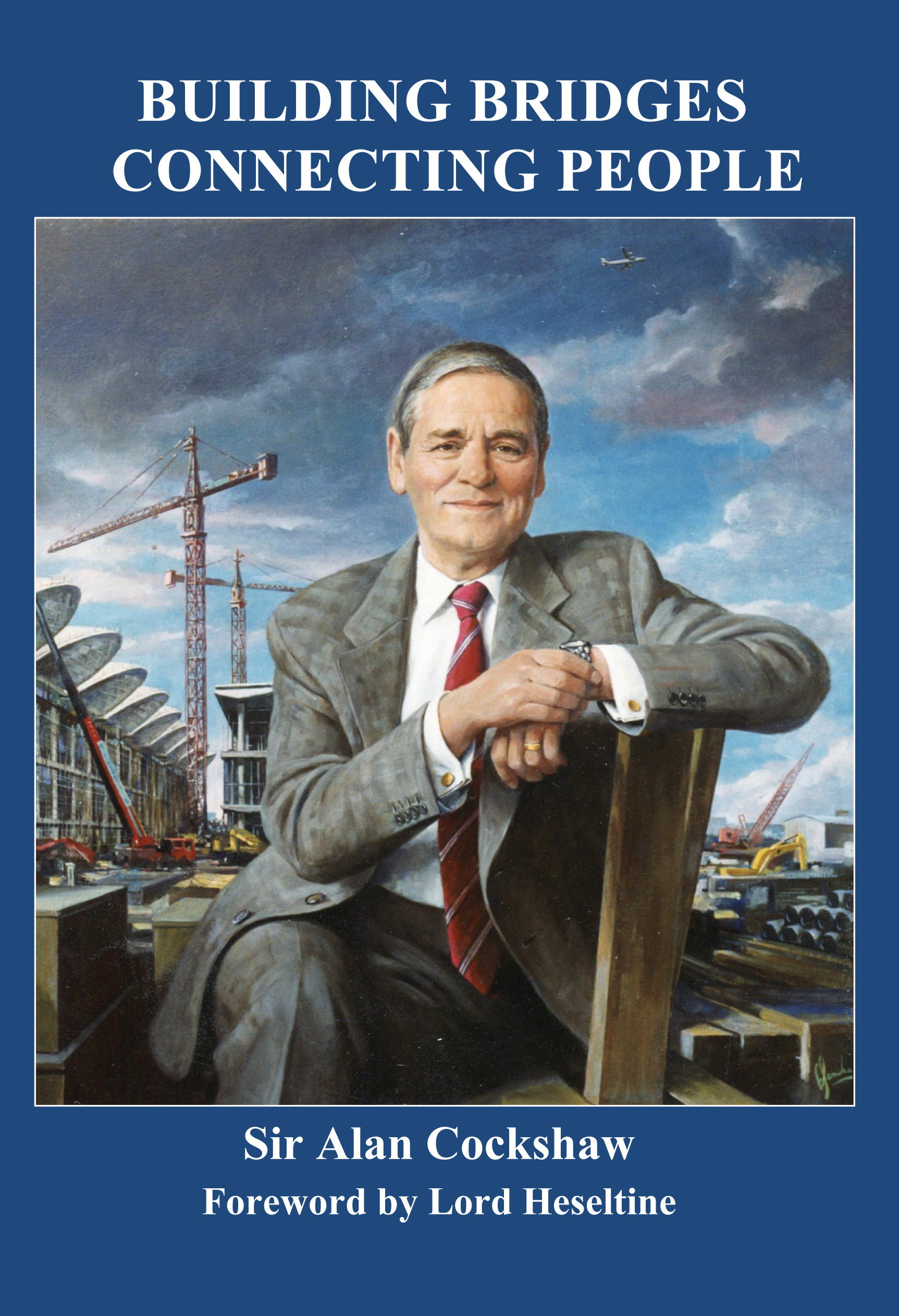
SIR ALAN COCKSHAW - BUILDING BRIDGES - CONNECTING PEOPLE

 SIR ALAN COCKSHAW 

BUILDING BRIDGES - CONNECTING PEOPLE

HARDBACK  £18  & UK postage £4.50

ISBN 9781841042312

How to Order

Available online at the following bookshops 
Waterstones including Click and Collect
Foyles
Hatchards
or direct from the publisher The Memoir Club

By Post: Mail to Lynn Davidson, The Memoir Club, 34 Lynwood Way, South Shields, Tyne & Wear, NE34 8DB cheque payable to Lynn Davidson.

By Email memoirclub@msn.com   or MOBILE 0755 2086888

Paypal: account access - memoirclub@msn.com

Bank transfer details    Lynn Davidson      Barclays
20 83 69        83948145  please insert COCKSHAW as bank reference


Book launch 
Building Bridges - Connecting People is an examination of the life and work of one of the UK’s most distinguished civil engineers. Written in his inimitable style, it is an engaging portrait of a driven man and his charm and lust for life. In this fascinating autobiography, readers will learn about Sir Alan’s early years and his engineering education under esteemed mentors, showing both the highs and lows of a life lived in the spotlight.
 
It is an honest story but also a useful historical document, giving a contemporary account of some major infrastructure developments written from an engineer’s point of view. It outlines the combination of grappling with technical problems, and the added challenges of politics.
 
His forty years of involvement in urban regeneration, vast business leadership experience and local knowledge were invaluable during the regeneration of Hulme and the rebuilding of Manchester city centre.
 
Sir Alan discusses his belief that engineers are problem solvers not problem creators. He emphasizes that the future of engineering requires more cooperation and partnering which would provide huge cost savings and greater efficiencies. He discusses the need for local and central government and the private sector to work together for the benefit of society as a whole. 

AUTHOR

Sir Alan Cockshaw is a highly respected figure in the business world. Born in Manchester he spent his early career in both the public and private sectors. He became the Chief Executive of Fairclough Civil Engineering in 1978 and a Director of Amec in 1982 before his appointment as Group Chief Executive in 1984. In 1988 he became Chairman until his retirement in 1997.

 He was Chairman of Manchester Millenium (1996-2000), English Partnerships and Commission for the New Towns (1998-2001) and Roxboro plc (1998-2002).

He became a Director of Pidemco, Singapore (1991-2001), Director of CapitaLand, Singapore & UK, and the International Advisory Board (2001-2007).

He was Chairman of the Governors of Bolton School (1997-2007) and Chairman of the Major Projects Association (2005-2010).

 He became a fellow of the Royal Academy of Engineering in 1986 and was President of the Institution of Civil Engineers (1997-98). He holds two Honorary Doctorates from Manchester and Salford Universities.

He was knighted in 1992.

FOREWORD

by

The Rt Hon. the Lord Heseltine CH

It is a curiosity of ministerial life that there is no formal process of training. One day you are a backbencher with a constituency to look after aided by whatever public or private sector experience that preceded your election to the House of Commons. A day later you are seated behind a desk appropriate to the dignity and status as one of His Majesty’s ministers responsible for policy direction over a myriad of issues about which you may have little knowledge or experience. You will of course, have a feel for what your party expects of you! An outside observer may feel that there must be a better way to run a whelk stall.

I revert to the concept of training ministers. If I were to design such a scheme Alan’s book would be required reading. He brings the objectivity of a trained professional to the multi-disciplined challenges of public policy. I share his view that once an objective has been set the first essential is to put someone in charge and create a mechanism to deliver. Results will invariably depend on cooperation between the public and private sectors based on an understanding of the essential contributions that both can bring. He makes the important point that as many of the problems to be solved have similarities abroad it makes sense to see how other countries cope.

There is a fashion to promote recently graduated party enthusiasts to act as political advisers to ministers. I never did that but time and again I appointed advisers to bring their specialist expertise into the heart of the civil service. Alan’s story is a role model of how men and women with proven track records can be attracted into public service for the enrichment of us all.

 REVIEWS 

Building Bridges – Connecting People is a biography of one of the UK’s most distinguished engineers. Born in Manchester, Sir Alan Cockshaw FREng became the chief executive of Fairclough Civil Engineering in 1978 and a Director of AMEC in 1982; he then became the Group Chief Executive (1984–1988) and then Chairman (1988–1997). He was knighted in 1992. He became a fellow of the Royal Academy of Engineering in 1986 and was President of the Institution of Civil Engineers from 1997 to 1998. In this memoir, Sir Alan writes about his life journey from humble beginnings in the north west of England to becoming a President of the ICE and being given a knighthood. Throughout the personal journey there are projects, people and companies who civil engineers will recognise. The lessons learned outlined through the book include very clear messages of the importance of team working and knowing their strengths. Pride of a job well done shines from every page, which is founded in hard work and determination. Each reader will for themselves be able to find relevance today in Sir Alan’s story but also of interest are the changes in the world during Sir Alan’s career. The book is very easy to read and could easily be picked up and put down, with each chapter clearly outlining a period of Sir Alan’s life. The text is supplemented by some great photographs of projects and people, including the all-important family and football teams linking nicely with the narrative. This book will be of interest to those who wish to better understand how the wider world of civil engineering interlinks and impacts upon wider society and can offer a worthwhile career option for all. It stands out as a real-life story of how a civil engineer has connected people through their work. This resonated with me as it really shows how one person with passion and purpose can make a difference. Paula McMahon CMgr, FCMI, CEng, FICE, 

 FWES https://www.icevirtuallibrary.com/doi/epdf/10.1680/jcien.24.00517

Building Bridges – Connecting People is a biography of one of the UK’s most distinguished engineers. Born in Manchester, Sir Alan Cockshaw FREng became the chief executive of Fairclough Civil Engineering in 1978 and a Director of AMEC in 1982; he then became the Group Chief Executive (1984–1988) and then Chairman (1988–1997). He was knighted in 1992. He became a fellow of the Royal Academy of Engineering in 1986 and was President of the Institution of Civil Engineers from 1997 to 1998.

In this memoir, Sir Alan writes about his life journey from humble beginnings in the north west of England to becoming a President of the ICE and being given a knighthood.

 Throughout the personal journey there are projects, people and companies who civil engineers will recognise. The lessons learned outlined through the book include very clear messages of the importance of team working and knowing their strengths. Pride of a job well done shines from every page, which is founded in hard work and determination.

Each reader will for themselves be able to find relevance today in Sir Alan’s story but also of interest are the changes in the world during Sir Alan’s career. The book is very easy to read and could easily be picked up and put down, with each chapter clearly outlining a period of Sir Alan’s life. The text is supplemented by some great photographs of projects and people, including the all-important family and football teams linking nicely with the narrative.

This book will be of interest to those who wish to better understand how the wider world of civil engineering interlinks and impacts upon wider society and can offer a worthwhile career option for all.

 It stands out as a real-life story of how a civil engineer has connected people through their work. This resonated with me as it really shows how one person with passion and purpose can make a difference. Proceedings of the Institution of Civil Engineers - Civil Engineering (2025) 178 (1): 78.


I am enjoying your book and admiring the author of such an excellent book  
of which you can be very proud. The title is very apt so well done there. I know how much labour will have gone into it. It has a prominent place in one of my bookcases.
Martin Howe


The best book I have ever read... what it says about leadership is astonishing. In my view, nobody has ever written a book about the construction industry like it. 

It’s also the best love story I have ever read.                           PC


Sir Alan and his wife Brenda have four adult children and live in the Manchester area.


MICHAEL SAUNDERS - FROM BARBED WIRE TO MOORLAND


MICHAEL SAUNDERS - FROM BARBED WIRE TO MOORLAND

Proceeds from the sale of books will go to Médecins Sans Frontières.

How to Order

HARDBACK  £14.50  & UK postage £3

SOFTBACK £9.50  & UK postage £3

By Post: Mail to Lynn Davidson, The Memoir Club, 34 Lynwood Way, South Shields, Tyne & Wear, NE34 8DB cheque payable to Lynn Davidson.

By Email memoirclub@msn.com   OR MOBILE 0755 2086888

Bank transfer details    Lynn Davidson      Barclays
20 83 69        83948145  please insert SAUNDERS as bank reference

AUTHOR

Michael Saunders has led a full and varied life, dominated by roles as a medical neurologist and an Anglian priest. His journey is both challenging and at times painful as he discusses his personal battle with a slow progressive form of muscular dystrophy leaving him as a full time wheel-chair user.

The author shares his life story and reflects on a time of transition in medicine and the practice of Christianity. He is open about his struggles with mental health and the movement from an exclusivist conservative evangelical version of Christianity to religious pluralism. This book emphasises the importance of intellectual honesty in any journey of self-discovery.

Michael is a retired consultant neurologist and Church of England priest. He spent many years in both roles simultaneously and has worked predominately in North East England and North Yorkshire. He spent a short time as a medical missionary in South India before returning to the UK through ill health. He is married to a retired psychiatrist and has four adult children and lives in the Yorkshire Dales.


AUTHORS WIFE, CHILDREN AND GRANDCHILDREN

This book is the story of a life starting on the South Coast of England just before World War Two and nearing completion in a historic small market town in North Yorkshire, at the foot of beautiful moorland, in the 21st century. The period represents a time of transition for the three most important things that have fashioned me. These are religion, medicine and a progressive muscle disease that has resulted in disabilities. I describe my religious and spiritual journey to ordination as an Anglican priest and subsequent ministry, life as a medical neurologist, and the diagnosis and progression of a form of muscular dystrophy.

The practice of formal Christianity has declined in the West. All-embracing dogmatic frameworks no longer impact on the majority of people. Advances in science challenge forms of religion that do not adapt to new knowledge. Young people have difficulty connecting with the established Church in the United Kingdom that is unable to embrace issues related to human sexual orientation and gender identity and at the same time unable to deal effectively with institutional sexual abuse. Increased global awareness has unveiled the challenge that other great faiths bring to Christian exclusivism. Instead of a move towards Christian liberalism, there seems to be a retreat into conservative Christianity during my lifetime. Large ‘successful’ churches may appear to suggest a general flourishing in churchgoing, but this is illusory. We live in a secular state. I describe my struggles with dogmatic Christianity, leading to a more open faith. I conclude that the majority of people who describe themselves as Christians are not within the walls of Christendom in the country I inhabit.

The practice of medicine has changed dramatically due to scientific progress. Many diseases are now treatable, and life expectancy has increased globally, but unequally. The advent of new imaging techniques and laboratory advances makes disease diagnosis more straightforward and accurate. Discoveries in genetics have enabled better classification of groups of disorders and novel treatment options. The development of vaccines has reduced the impact of some infectious diseases and eradicated smallpox. Yet, other new infections have occurred, including AIDS and the Covid pandemic. The discovery of antibiotics has reduced the mortality and morbidity of bacterial infections, although antibiotic resistance has emerged as a challenge to their effective use.

Society takes a more enlightened attitude towards people with impairments and disabilities. Advances in equipment design and development have reduced handicap, and there are more accessible buildings. Legislation has enhanced progress.

Unfortunately, aids for people like myself, with muscular dystrophy and other neurological diseases may be expensive and unavailable through the National Health Service. Self-funding or charitable donations fill the void in service provision.

My family has been my inspiration. I pay tribute to their love and support through good times and bad. They may not share my opinions all the time, but we have discussed and argued in a way that only families can. Although my days have been happy, privileged and fulfilling, there have been periods of difficulty and sadness. Although it is tempting to omit such episodes, they are part of me. There is no point in recalling a sequence of events without reflection, but I have tried to place any sorrows in perspective. I have seen enough poverty and suffering in this world to realise that I have lived a good life, full of interest and meaning. 


REVIEWS

I read Michael’s earlier book from Certainty to Mystery because initially I was particularly intrigued by the title. It then became very clear that this was the Michael that I had known in the late 1950s early 60s. I renewed contact with Michael mainly because I identified with his faith journey. We had both been part of a lively Baptist youth group in Hove which we are both very grateful for but now for different reasons our personal journeys have taken us from a faith that was certain, sure and clear cut to one which is happy to embrace mystery and uncertainty.

I have just read Michael’s autobiography from Barbed Wire to Moorland which is remarkable in the detailed memories that Michael has of both his early life until the present time . The early influence of family school and church life are clearly recorded and thoughtfully analysed. Michael is now in his mid 80s, but his memories are clear and detailed and he recalls clearly the influences that have been powerful for him over the years.

Michael from early days has struggled with significant health issues and with his mental health. This in no way has distracted from a long and distinguished career as a neurologist and latterly as a Church of England priest. In fact it seems to me it has enriched him. I was fascinated to read about his experience of working in India and how that was a pivotal period for rethinking so much about his evangelical understanding of Christianity.

I am full of admiration that he continues to think and write despite increased disability because of his progressive muscular dystrophy. As we go through life, we have the opportunity to learn from all our different experiences if we’re willing to allow them to teach and change us - this is exactly what Michael has done and I’m grateful for his latest book and warmly recommend it.
Sue Saville